Some headlines write themselves. “AI Reads 2,000-Year-Old Scroll” is pure timeline catnip, the kind of thing that gets 40,000 retweets from accounts with Greek statues in their profile pictures. The actual story is messier, slower, and far more interesting than that. A team of imaging scientists, papyrologists, and classicists spent years coaxing text from a lump of carbonized papyrus that had been baked to charcoal by Mount Vesuvius in 79 CE. The machine helped, but humans did the reading.
What Actually Happened
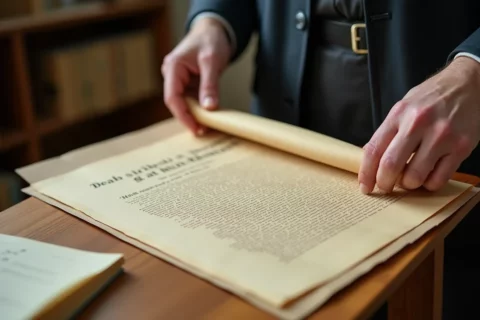
The scroll came from the Villa of the Papyri at Herculaneum, the only intact ancient library ever recovered from the Greco-Roman world. When Vesuvius erupted, pyroclastic flows hitting up to 500°C flash-carbonized the villa’s collection of roughly 1,800 scrolls. That same heat sealed them from rot and oxygen, preserving them for nearly two millennia. It also fused their layers into brittle, charcoal-black cylinders that crumble at a touch. Physical unrolling has been attempted, but it has destroyed things.
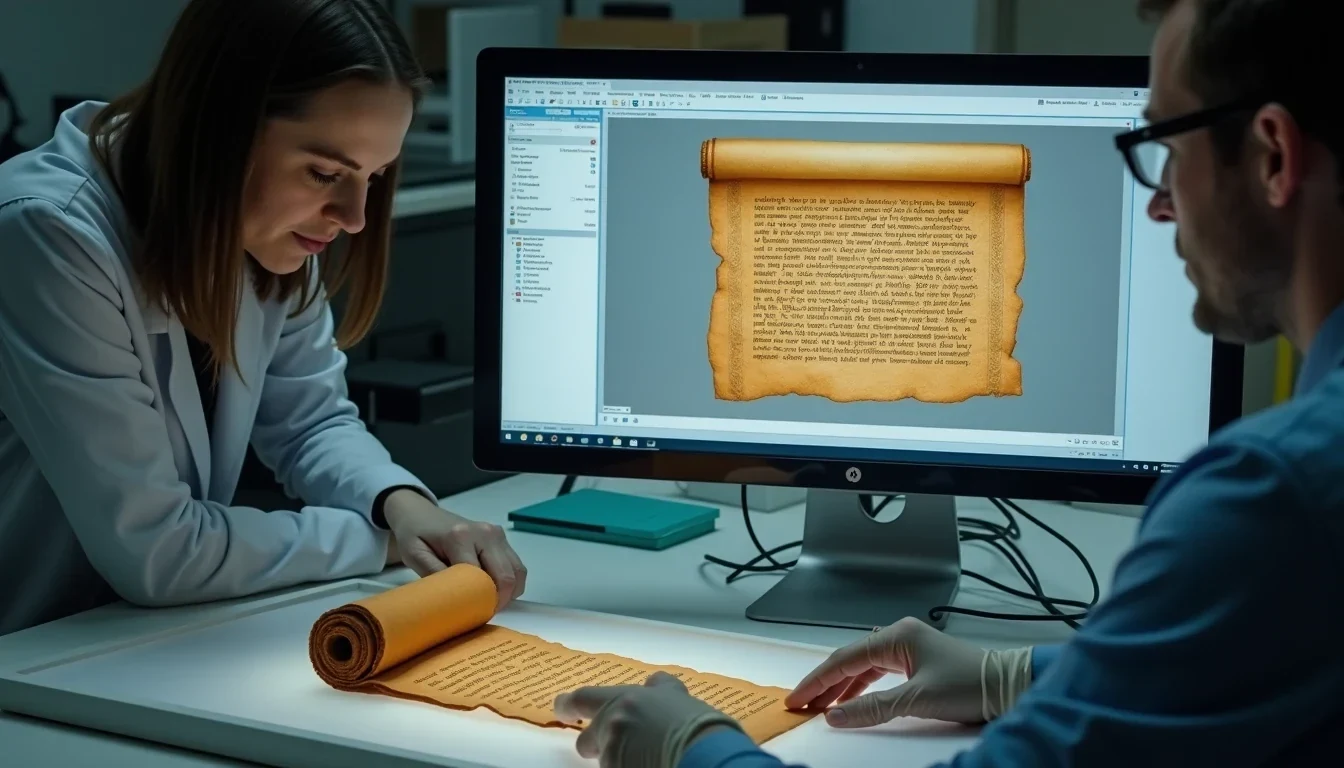
The breakthrough used X-ray micro-computed tomography, essentially high-resolution 3D scanning that penetrates the scroll’s interior without contact. The catch was that the ink was carbon-based, nearly identical in density to the carbonized papyrus itself. Researchers found their contrast in trace lead content from ancient ink preparation. Machine learning algorithms were trained to pick out these faint signatures from noise and fiber patterns. The output was not translated text; it was a digital map of possible marks, layer by layer, which software then segmented and flattened into virtual surfaces.
The “page” became a digital object assembled from a crushed cylinder. Every step after the scan involved human judgment. Imaging scientists isolated layers and refined the algorithmic output. Papyrologists tested letter shapes against known Greek scripts, deciding whether a faint trace was an alpha or a smudge. Classicists argued over meaning, context, and gaps. The internet-friendly win of “AI reads ancient book” obscures a chain of painstaking, uncertain decisions that stretches from raw data to a single clean sentence of translated philosophy.
The Aftermath
The recovered passages belong to Philodemus of Gadara, a 1st-century BCE Epicurean philosopher whose works dominate the Villa of the Papyri collection. The text examines pleasure, ethics, and human nature, including arguments about sensory experiences like music, color, and food. One thread explores how these pleasures are neither inherently good nor bad, but depend on disposition and context. This is part of the broader Epicurean pursuit of ataraxia, that untroubled tranquility that comes from moderation and intellectual engagement.
Our picture of Epicureanism has been filtered through later interpreters, many of them hostile or reductive. The villa’s library offers direct access, unmediated by medieval transcription or Christian polemic. Philodemus himself was largely known through fragments and secondhand references before these scrolls started yielding text. Each new deciphered passage is a voice from inside the school, not a summary from outside it.
The challenges remain severe. Large sections of text are missing, obscured, or only partially legible. Many ink traces are ambiguous enough that a single character could read multiple ways, forcing papyrologists to make informed guesses based on paleography, grammar, and philosophical terminology. A translated sentence that reads cleanly in English might rest on dozens of uncertain fragments and scholarly debate about what sits in the lacunae. The process is iterative and contested, not the instant revelation the headline suggests.
The Villa of the Papyri itself, believed to belong to Lucius Calpurnius Piso Caesoninus (Julius Caesar’s father-in-law), has been yielding these tensions since its 18th-century discovery. Its roughly 1,800 scrolls represent an enormous private collection by ancient standards. This collection is overwhelmingly philosophical where other surviving ancient texts skew toward literature or oratory. The ongoing work holds potential for recovering lost masterpieces across multiple disciplines, but each recovery is hard-won.
The real narrative here is collaboration at its most grinding. Machine learning detected patterns no human eye could reliably spot in the X-ray data. Humans then spent years turning those patterns into letters, letters into words, and words into arguments. The scroll was not opened; it was rebuilt, debated, and partially understood, with large stretches still opaque. That is the actual win: not magic, but persistent, fragmentary progress against material that has resisted reading for two millennia.