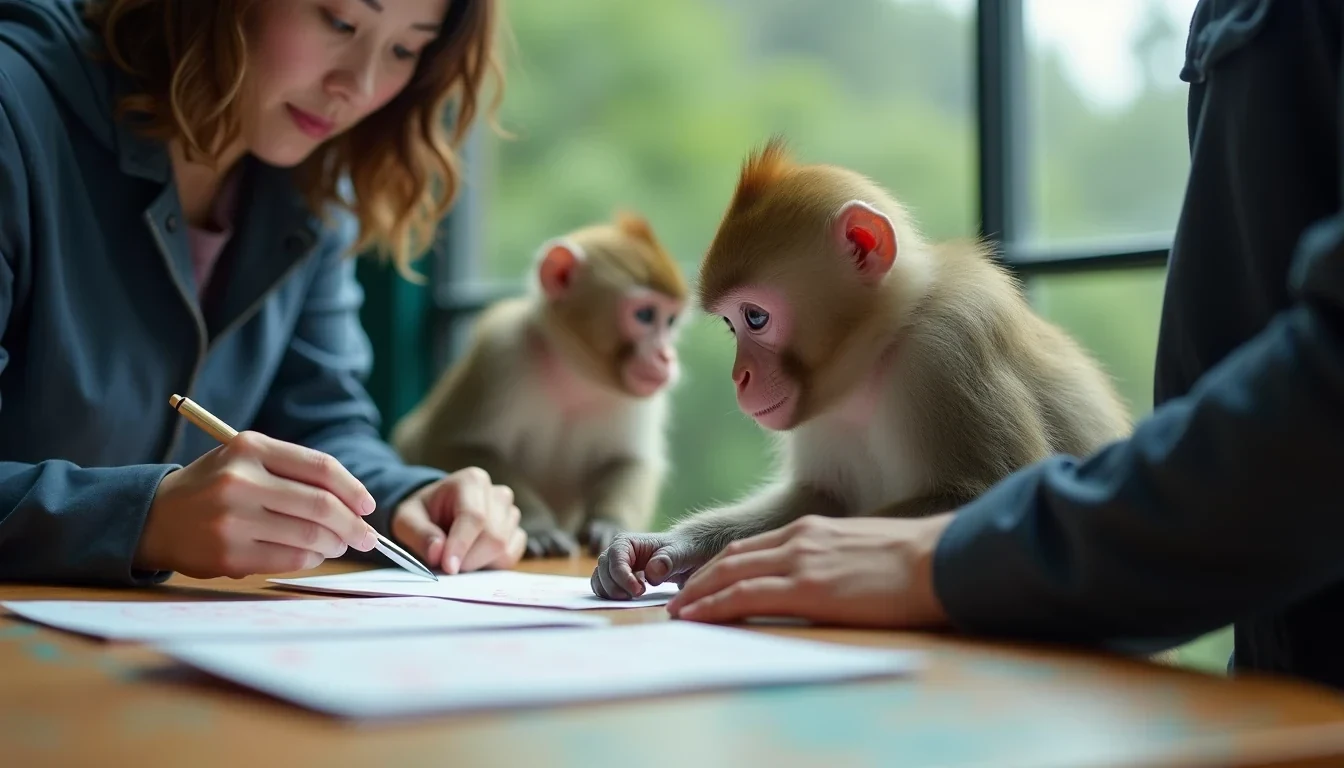
Punch the macaque hit the internet like a perfect parlay. A tiny monkey, rejected at birth, clutched an orangutan plush twice his size while the world watched through a screen. The Ichikawa City Zoological and Botanical Garden near Tokyo struck content gold without trying, and Punch became the kind of story that stops thumbs mid-scroll. The monkey moved on, but his fans did not.
By July 26, 2026, Punch had turned one. He had integrated with other Japanese macaques, found actual social bonds with living creatures, and largely abandoned the plush toy that made him famous. The zoo’s primate team watched a standard, healthy developmental arc play out exactly as it should. Meanwhile, over 2,500 birthday cards and messages flooded in from around the world, enough that staff had to build a dedicated display wall just to hold the surplus. The volume exceeded their physical capacity to showcase it. Punch had graduated from his comfort object faster than his audience could process the plot.
What Actually Happened
Punch’s origin story hits every beat of engineered viral content, but nobody engineered it. Born at Ichikawa, rejected by his mother (a documented pattern with first-time macaque mothers or offspring perceived as weak), he did what isolated infant primates do: he attached to a substitute. The orangutan plush provided tactile security during a critical window. Photographers caught the contrast of tiny fingers wrapped around synthetic fur, and the image propagated through social feeds with the velocity of a knockout highlight reel.
The zoo facilitated gradual introductions to the existing macaque colony. Staff managed the process carefully because premature or forced socialization with older, established monkeys carries genuine risk for a vulnerable juvenile. Punch’s progression followed predictable primate development: initial dependence, exploratory behavior, tentative contact, sustained interaction, and eventual integration. By his first birthday, he was functioning as a social macaque among social macaques. The plush became background clutter. He might investigate it occasionally, but the urgent clutching behavior vanished. The toy had served its purpose.
Human projection collides with animal behavior here. Viewers mapped a complete childhood narrative onto Punch’s first year: orphan finds substitute parent, orphan clings to transitional object, orphan heals through love and community. The template is deeply familiar from human developmental psychology, and audiences applied it wholesale. The plush was never a teddy bear equivalent. For Punch, it was a static source of warmth and pressure during a period when his nervous system required exactly that input. The emotional symbolism was entirely human-generated. He did not love it; he needed it, used it, and discarded it when his needs changed.
The Aftermath
The birthday wall at Ichikawa stands as physical evidence of narrative lag. Fans invested in Punch’s vulnerability continued celebrating a version of him that no longer existed. The 2,500-plus messages projected ongoing fragility, a recovery still in progress, a milestone of healing that the subject had already surpassed. Some cards likely referenced the plush toy directly, treating it as a cherished companion rather than a discarded tool. The zoo displayed them dutifully, but the scene creates a strange temporal dissonance. The monkey had moved through his story; his audience remained anchored to Act One.
The financial upside is real. Donations tied to Punch’s popularity funded air conditioning installation in part of the monkey enclosure during Japan’s summer heat. That is concrete welfare improvement with direct benefit to multiple animals, not just the viral star. Zoos globally face chronic underfunding for habitat maintenance, and sudden attention surges can convert into infrastructure that outlasts any individual animal’s fame. Punch generated resources that improved conditions for his entire social group.
The cost runs parallel and is harder to quantify. Viral animal stories create permanent character arcs for creatures who live in present-tense biological reality. Punch became “the orphaned macaque with the toy,” a branded identity that his own behavior invalidated within months. Zoos face implicit pressure to maintain these narratives, to keep the comfort object visible, and to stage the reunion that feeds audience expectation. Ichikawa appears to have avoided this trap, but the incentive structure exists across institutions. A monkey who has outgrown his story becomes a continuity problem in marketing terms.
The Deeper Play
Anthropomorphism is not automatically destructive. It drives conservation funding, zoo visitation, and legislative support for habitat protection. The emotional hook matters. It becomes destructive when it overrides observable behavior, when the projected narrative becomes more real to viewers than the animal’s actual condition. Punch’s fans treated his first birthday as a human-style milestone of continued recovery rather than recognizing what the zoo staff saw: a standard primate development completed successfully, on schedule, with professional support.
The broader pattern extends far beyond one Japanese macaque. Viral animal content consistently selects for infantile or vulnerable traits, amplifies them, and resists updates that complicate the initial framing. Adult animals with resolved backstories do not perform as well. Integrated, socially functional creatures lack the dramatic tension that drives shares. The content economy rewards permanent childhood, permanent struggle, and permanent need for human emotional investment. Punch escaped this trap biologically. Whether his audience ever does remains an open question.
The plush orangutan still exists somewhere in the Ichikawa enclosure, probably. Punch walks past it now, unbothered, on his way to actual monkey business with actual monkeys. The birthday wall will come down eventually, the cards archived or recycled. The donations bought air conditioning that will outlast both the wall and the specific memory of why it arrived. That infrastructure is Punch’s real legacy, though nobody photographs it for viral distribution. Some wins do not look like wins in the feed; they just improve the temperature for creatures who will never trend.