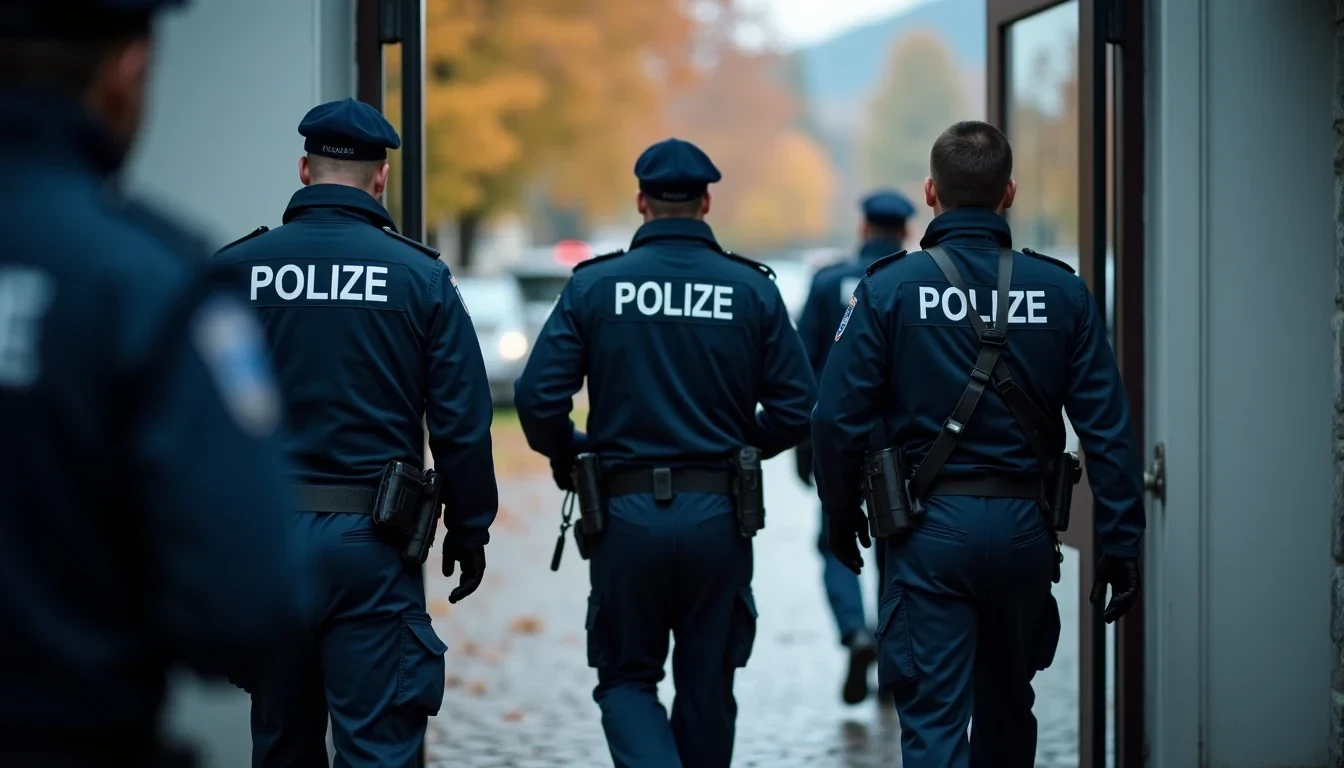
Austria spent €20 million to make a building boring. Not safer, smarter, or more beautiful, just boring. The property at Salzburger Vorstadt 15 in Braunau am Inn opened as a police station in July 2026 after a redesign so aggressively forgettable that the architects flattened its roof to kill any silhouette worth photographing. The goal was to deny Adolf Hitler’s birthplace the one thing extremists need: a stage.
What Actually Happened
Hitler lived here for roughly two months in 1889. He left as an infant, never returned, and the building should have faded into the ordinary architecture of a border town. Instead, it became a seventy-year hostage situation. The Pommer family, who bought the place in 1912, watched their property transform from a modest inn into a global symbol of evil. The Austrian Interior Ministry started renting it in 1972 for about €4,800 monthly, using it for workshops and disability services, anything to keep it from becoming a pilgrimage site.
By 2016, the arrangement collapsed. Gerlinde Pommer refused sale and renovation, and the stalemate forced Austria’s hand. Parliament passed a special expropriation law, the Supreme Court upheld it in 2017, and Pommer walked away with €812,000 after demanding €1.5 million. The state finally owned its own headache.
Then came the design competition. Thirty European architects submitted proposals for how to solve a building that could not be demolished, memorialized, or left alone. Marte.Marte Architects from Vorarlberg won with a strategy of deliberate architectural amnesia: strip the gabled roof, genericize the facade, resize the windows, gut the interior into offices and holding cells. The €20 million transformation finished late 2025. Police moved in seven months later.
Interior Minister Wolfgang Peschorn called the result “the exact opposite of a cult site.” He meant bureaucracy as disinfectant: paperwork instead of pilgrimage, traffic violations instead of torchlight processions.
The Aftermath
The critics arrived on schedule. Historians and anti-fascist groups argue that Austria chose a solution that processes nothing. A police station prevents a shrine, but it also prevents education, reflection, and confrontation. The building’s weight demands engagement, they say, and Austria responded with filing cabinets.
The local calculus differs. Braunau am Inn spent decades as “that town” in international coverage, its other history and identity flattened by association. Residents largely wanted the matter closed, the property normalized, and the stigma diluted into daily routine. The police presence brings practical security benefits. The “stone of remembrance” outside still reads “For Fascism: Never Again,” shifted slightly during construction but surviving as the sole explicit marker. Locals insisted on keeping it. That small granite block now does almost all the historical work that the €20 million building refuses.
The tension sits unresolved in the architecture itself. Officers process reports in rooms where Hitler drew breath. Detainees wait in cells built atop foundation stones from 1889. The mundanity is the point, but mundanity cannot erase what it responds to. Every visitor who knows the address knows anyway. The building’s anonymity becomes its own kind of shouting.
Austria bet that function would smother symbolism. They may find that symbolism outlasts every desk, uniform, and flattened roofline. The debate continues because the problem was never really architectural. It is about whether a society can bureaucratize its way through memory, or whether memory waits, patient and indifferent, for the filing cabinets to rust.