
The last fluent speaker of Ubykh died in 1992. Tevfik Esenç, a Turkish farmer, spent his final years recording words no child would ever naturally acquire. His language held 84 consonants, including a click made by pulling the tongue backward from the roof of the mouth. Try teaching that through a cassette tape.
A study arriving next year puts this loss in staggering scale. Researchers ran mathematical models across 12,000 years of human history, feeding in anthropology, linguistics, and population data. They found humanity hit peak language diversity thousands of years ago and has been shedding ways of speaking ever since. The culprit is not some recent digital invasion. States, empires, trade routes, colonial administrations, and the brute gravity of national languages have been compressing human expression since before recorded history. The ancient world was noisier, stranger, and more linguistically crowded than anything we know now.
What the model actually shows
The researchers built their timeline using tools borrowed from ecology and population genetics. Bayesian phylogenetic methods traced language family trees and estimated when tongues split from common ancestors. Agent-based models simulated individual speakers making choices about which language to use in which context. Archaeological proxies, settlement patterns, material culture, and genetic migration markers all fed estimates of how many distinct communities could sustain distinct ways of speaking.
None of this produces certainty. Prehistoric languages left no recordings. Most left no writing. The models rest on assumptions about ancient population densities, rates of social contact, and how quickly languages typically diverge. The researchers know this. They run sensitivity analyses, test how changing one assumption reshapes the whole picture, and report probability ranges rather than single numbers. The finding that diversity peaked millennia ago is robust enough to publish. The exact year and the exact count of languages remain educated guesses dressed in equations.
The shape of the curve is what matters. Languages multiplied as humans spread across continents and isolated themselves in valleys and islands. Then the rise of complex societies reversed the trend. A village of three hundred can sustain its own grammar. An empire of millions cannot tolerate ten thousand tax codes.
What disappears with the last speaker
The model is abstract. The death of Ubykh was specific. Esenç’s recordings captured words for types of snow and ice that Turkish cannot distinguish. They captured kinship terms precise enough to identify a relative’s exact position in a lineage without additional explanation. They captured jokes that required understanding how Ubykh grammar could twist a verb to mock the speaker himself.
The spreadsheet misses this. A language is not a vocabulary list. It is a way of organizing attention. The Koyukon people of Alaska use hundreds of distinct terms for snow conditions because their survival depends on reading ice the way a stock trader reads candlesticks. Some languages encode direction through absolute cardinal points rather than relative left and right, which reshapes how speakers remember spatial relationships. Hawaiian and Māori revitalization efforts have recovered not just words but entire frameworks for ecological management that colonial governments later had to relearn through expensive scientific programs.
Place names go first. An indigenous name for a river might describe its behavior in flood season, its association with a specific ancestor, and its role in a seasonal migration pattern, all in three syllables. The replacement name, “Johnson River” or “New Town Creek,” carries none of this. Family memory follows. When grandchildren can no longer speak with grandparents, the stories survive only in summary, stripped of the timing and tone that made them instructions rather than entertainment.
The connectivity paradox
The study stings here. The internet was supposed to connect everyone. Instead it is finishing what empires started. Over half of all web content exists in English. Mandarin, Spanish, and Arabic dominate most of what remains. The thousands of languages with fewer than ten thousand speakers barely register. Voice assistants do not understand them. Spell checkers flag every word. Machine translation, that great democratic promise, trains almost exclusively on dominant languages and produces gibberish for everything else.
The economic pressure is direct and brutal. Parents in Papua New Guinea or the Amazon see their children need English, or Mandarin, or Spanish, for any job beyond subsistence. The choice is not between heritage and assimilation. It is between heritage and eating. Global media reinforces the hierarchy. A teenager in a minority language community consumes the same entertainment as a teenager in Los Angeles, absorbs the same cultural references, and gradually experiences their home tongue as a limitation rather than a resource.
Migration accelerates the shift. Rural areas maintain linguistic diversity because isolation protects it. Cities demand a common language for transaction, and transaction is survival. The child who moves to a metropolis for work returns home with a different vocabulary, different jokes, different ways of describing frustration or desire. The grandparents’ speech becomes a marker of the past, not the future.
Archives and the illusion of preservation
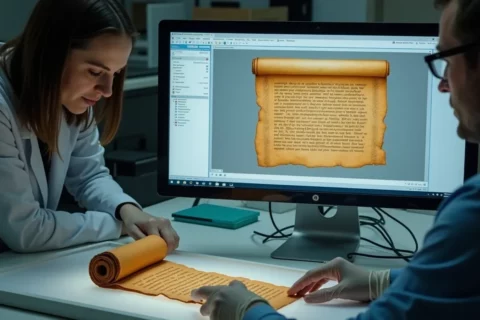
This brings us to Tevfik Esenç and his cassettes. Recording a dying language is not preserving it. It is documenting extinction. The Endangered Languages Documentation Programme and similar efforts produce invaluable resources for linguists. They create the raw material for potential revitalization, as happened with Hawaiian and Māori, where community commitment combined with archival material to produce new generations of speakers.
The archive itself is a frozen moment. It captures how Ubykh sounded in 1985, not how it would have evolved to describe smartphones, climate change, or remote work. A living language adapts. A recorded language is a specimen. Hebrew’s revival from liturgical use to national language of Israel required not just texts but schools, newspapers, military commands, and love poetry—all the messy social infrastructure that makes a language breathe.
The harder question is whether we should even try. Some communities actively choose to shift, seeing their heritage language as a burden in a world that rewards other skills. External preservation efforts can feel like anthropological tourism, with outsiders insisting that others maintain a way of life for the sake of global diversity. The 2026 study does not resolve this. It simply makes the scale visible. We are not losing languages to some new threat. We are continuing a process that began with the first cities, and our hyper-connected present is the most efficient engine of linguistic homogenization ever built.
Esenç’s recordings still exist. You can listen to them online. The click consonants sound like nothing else, precise and strange. No one will ever produce one in casual conversation again. That is what peak language looks like in reverse: not a number in a model, but a single sound that once meant something specific, now preserved as data, waiting for a listener who will never arrive.