
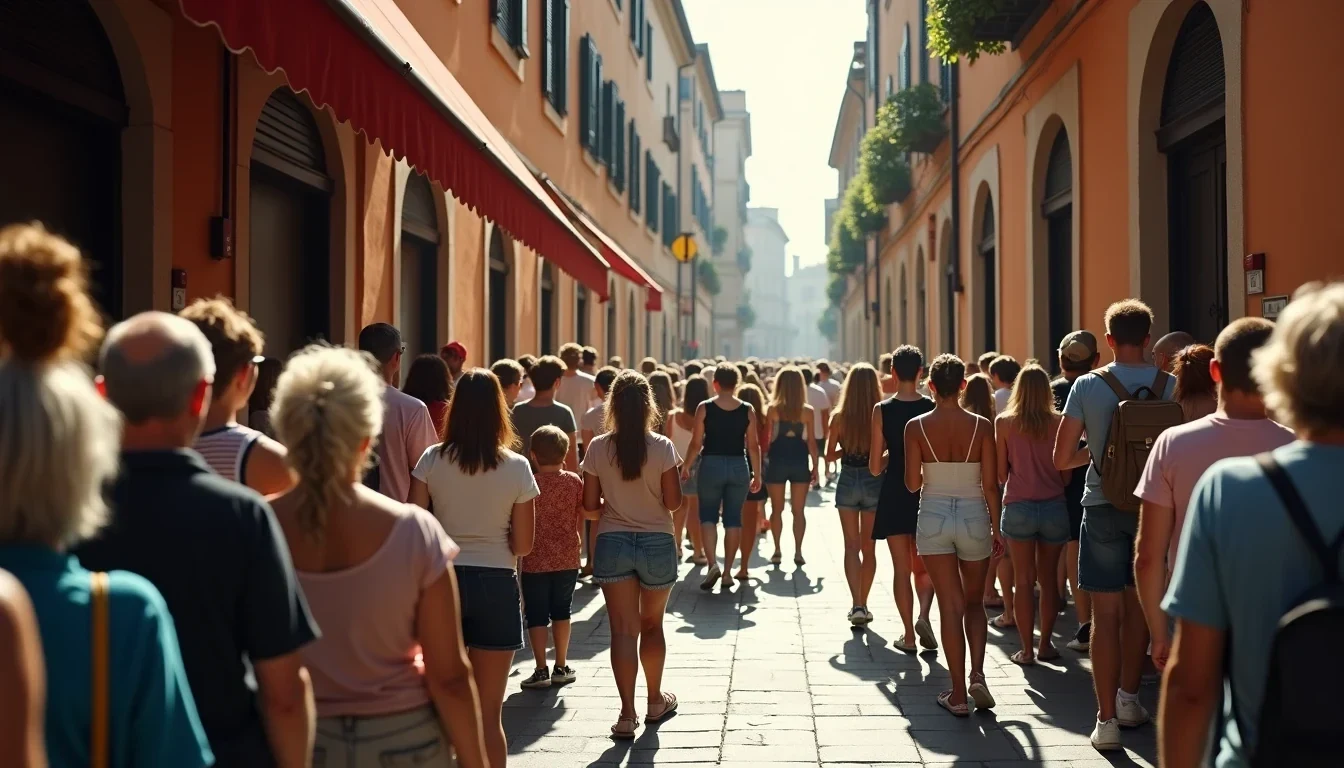
Rome admitted its apartments cannot handle summer anymore. Eleven cinemas across the city now unlock their doors from 1pm to 6:30pm, pump the AC to arctic, and let anyone sit through whatever film is playing that day. No ticket. No purchase required. Just show up, find a seat, and stop sweating.
Mayor Roberto Gualtieri calls it public health policy. The reality is more blunt: when government has to rent out movie theatres so citizens do not cook alive in their own homes, something fundamental has broken.
What Actually Happened
The mechanics are simple enough. Rome identified eleven venues already built for marathon sitting, engineered darkness, and industrial climate control. The city pays existing cinemas to stay open during peak heat hours and absorb whoever queues up, rather than erecting cooling shelters from scratch. First-come, first-served. One screening daily per venue, rotating titles. The municipality covers electricity spikes, staffing, and whatever licensing fees come with showing older or public-domain films.
Capacity lands somewhere between 1,650 and 3,300 people daily across all locations. That assumes every seat fills, every day, which assumes a lot. Rome proper holds 2.8 million residents. The metropolitan region pushes past 4.3 million. National statistics suggest over half of Italian households in certain regions run no home air conditioning, a figure concentrated in older buildings and lower-income pockets where retrofitting costs bite hardest.
The math is ugly. On Rome’s hottest days, a few thousand seats open up for a few hours against a population of millions who need relief. The program is not scaled to solve the problem; it is scaled to be seen trying.
The Aftermath
Gualtieri has been explicit about the target demographic: residents with no home AC, the exact group most vulnerable to heat stress. Early attendance patterns confirm the reach. Families with young children show up. Students drift in. Older residents, the ones most at risk from cardiac strain and dehydration, represent a visible share of the seats.
Accessibility remains patchy. The venues sit near public transport nodes, which helps. But first-come, first-served punishes anyone who cannot stand in a queue for thirty minutes at midday in July. No dedicated transport or priority entry for the frail or immobile has surfaced in reporting. The design assumes mobility that many heat-vulnerable seniors simply do not possess.
For the cinemas, the arrangement carries commercial upside beyond the municipal subsidy. Concession sales spike with foot traffic. A grandmother who came for the cooling might return next month for a paid screening of something she actually wants to see. The venues collect data on when people arrive, how long they stay, what they buy. Independent theatres struggling against streaming competition get a government-funded audition with audiences who forgot cinemas existed.
The historical echo is unavoidable. American theatres from the 1930s through the 1950s sold “air-conditioned comfort” harder than they sold the films. Patrons bought tickets to sit through double features they barely watched, treating the auditorium as the coolest room in town. The difference is that those customers paid. Rome’s program inverts the transaction: cooling is the product, the film is the packaging, and the state picks up the tab.
This inversion creates tension. A city with functioning domestic infrastructure does not need to nationalise cinema aircon. A city with adequate public cooling shelters does not need to repurpose entertainment venues as emergency infrastructure. Rome’s program is genuinely clever in its resourcefulness, but it is also a confession that other systems failed first.
The question Gualtieri’s initiative raises, but does not answer, is what happens when summer stretches longer and hotter. Eleven cinemas for five and a half hours cannot scale. The concession bump will not sustain theatres forever. And the elderly resident who cannot queue, or cannot reach the venue, or arrives to find seats full, still has a bedroom that hits 34 degrees by mid-afternoon.
Rome has built something memorable here: a public service wrapped in nostalgia, delivered through private venues, funded by a municipality that ran out of better options. It will be studied, copied, probably celebrated. But the cleverest fixes often reveal how deep the rot goes.