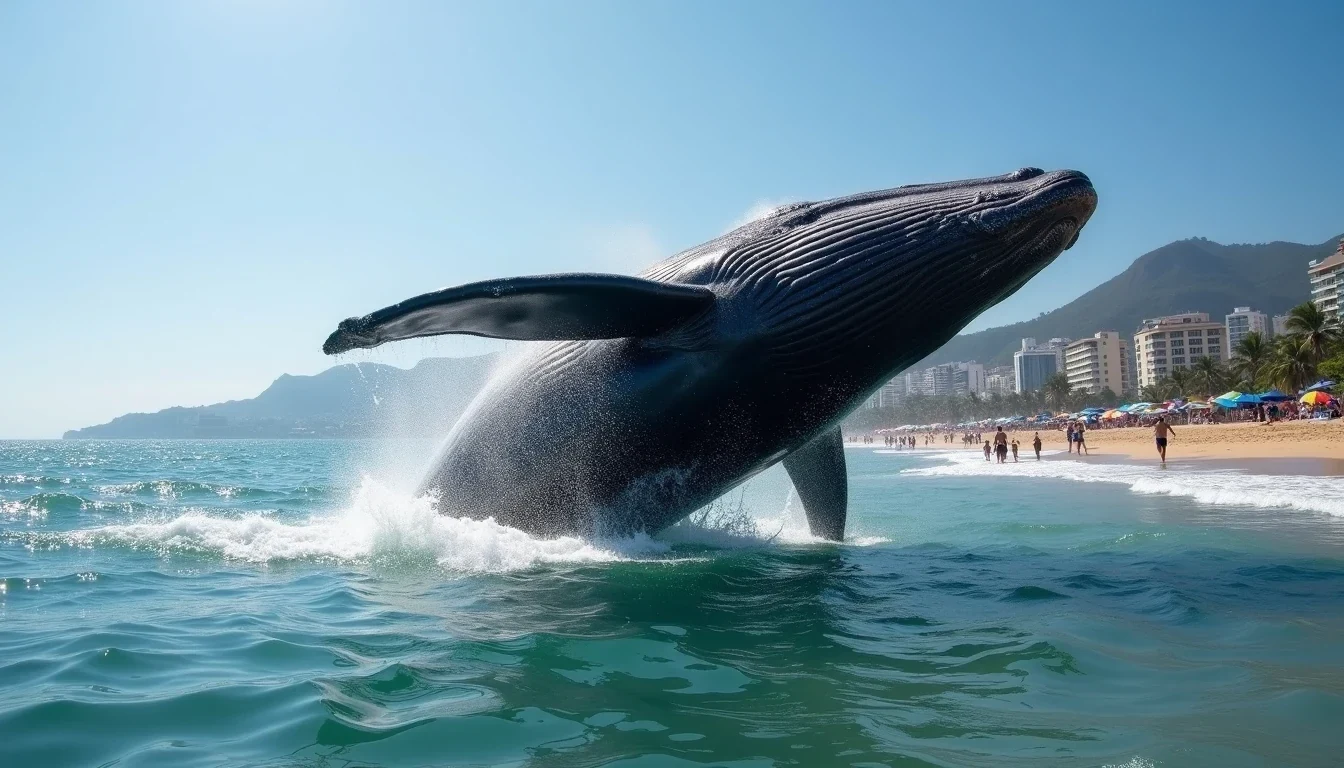
A humpback whale just breached off Ipanema, not on some Nat Geo expedition boat three hours from land, but right where beach vendors sell agua de coco and the postos fill with Cariocas on Sunday afternoon. Thirty-five thousand western South Atlantic humpbacks are back from the edge of oblivion, and they are not respecting Rio’s urban boundaries.
What Actually Happened
The 2026 migration season has delivered something no one running a beach kiosk planned for. Humpbacks are pushing into Guanabara Bay itself, that bowl of water famous for Olympic sailing footage and the occasional floating sofa. Between June and November these animals make their run north from Antarctic feeding grounds to breed along Brazil’s coast. This year, the difference is proximity. Phone footage comes from apartment balconies in Niterói. Kayakers are surprised off Barra da Tijuca. A creature that carries a migration route longer than most commercial flights surfaces for breath in waters that also handle container shipping, fishing trawlers, and whatever else Rio’s 6.7 million residents flush toward the ocean.
The population math tells the story bluntly. Commercial whaling crashed western South Atlantic humpbacks to roughly 2,000 by the mid-20th century. The International Whaling Commission’s 1986 moratorium, building on earlier humpback-specific protections from the 1960s, let the rebound start. Annual growth has run about 7.4% since the 1990s. Today’s estimate sits at roughly 35,000, which actually exceeds pre-whaling historical estimates of 25,000 to 27,000. This is not a fragile recovery; this population came back angry, loud, and ready to reclaim territory.
That territory now overlaps with one of the most photographed urban coastlines on Earth.
The Aftermath
Brazil’s Humpback Whale Project, Projeto Baleia Jubarte, has been building fluke identification databases for years. Each whale carries a tail pattern as unique as a fingerprint: pigmentation layout, scar geometry, serration edges. Researchers photograph the ventral surface when animals surface, then run comparisons against historical catalogs and global platforms like Happywhale. Some individuals get satellite tags for movement data. Hydrophones capture vocalization patterns. Citizen submissions from those balcony photographers fill gaps the research boats cannot cover.
The tracking has a practical urgency now. More whales in busier water increase the chances for everything to go wrong.
Boat strike risk scales with vessel traffic. Whale-watching demand is adding boats specifically designed to find animals already stressed by noise and proximity. Engine hum disrupts the acoustic environment humpbacks use for navigation, mating communication, and locating prey. Poorly managed tours cluster around surfacing animals, altering feeding and nursing behavior. Entanglement with fishing gear or mooring lines injures or drowns whales. Guanabara Bay’s existing pollution burden, already notorious, gets no relief from increased marine activity.
Regulatory responses are forming but are uneven. Minimum approach distances of 100 to 200 meters exist on paper. Speed limits in whale presence zones get announced seasonally. A permit and licensing system for commercial operators is supposed to cap boat numbers and enforce training requirements. Operator certification programs cover whale biology and responsible viewing protocols. Designated viewing corridors attempt to concentrate human activity away from critical breeding pockets.
The gap between announced rules and observed behavior creates tension. A viral video of a whale breaching near a paddleboarder generates more booking inquiries than a government press release about approach distances. The economic signal overwhelms the regulatory one.
The New Rio
For decades Rio exported a specific visual package. Christ the Redeemer with arms open. Sugarloaf cable cars against sunset. The patterned sidewalks of Copacabana packed with bodies during Carnival. Natural spectacle meant rainforest day trips or the occasional capybara in a lagoon. A 40-ton marine mammal surfacing within sight of luxury high-rises was not part of the brand.
That is changing. Residents who grew up with whales as textbook extinction stories now share apartment-group chats about morning sightings. The ecological comeback reframes local identity in real time. Rio becomes a place where urban density and wild migration coexist, where the same water that carried colonial shipping, industrial waste, and Olympic regattas now hosts one of conservation’s most dramatic population recoveries.
The city did not earn this. The whales came back because international agreements held, because Antarctic feeding grounds remained productive, and because enough individuals survived the whaling era to rebuild genetic diversity. Rio is the beneficiary of timing and geography, a warm coastline positioned where a growing population needs to breed. What the city does with that accidental gift is the open question.
Tourism operators are already rebranding. Whale-watching packages are layered between favela tours and hang-gliding excursions. The challenge is whether the revenue funds better protection or merely accelerates the problems. Every boat carrying paying customers to see a fluke means another engine in the water, another variable in an already crowded system.
The researchers keep photographing tails, matching patterns, and building the evidence for whatever management regime comes next. Individual whales are tracked across seasons, across years, and across the thousands of kilometers between Antarctic krill and Brazilian warmth. The data will outlast any single migration season, any single mayor’s administration, and any single viral clip.
Thirty-five thousand humpbacks made a decision humans did not vote on. They are voting with their bodies, their migration, and their willingness to swim close enough that a Carioca on a morning jog can stop and watch. The win belongs to conservation. What happens next belongs to whoever can balance a phone camera with a speed limit, a booking app with a 200-meter buffer, and the desire to witness something ancient against the patience to let it breathe.