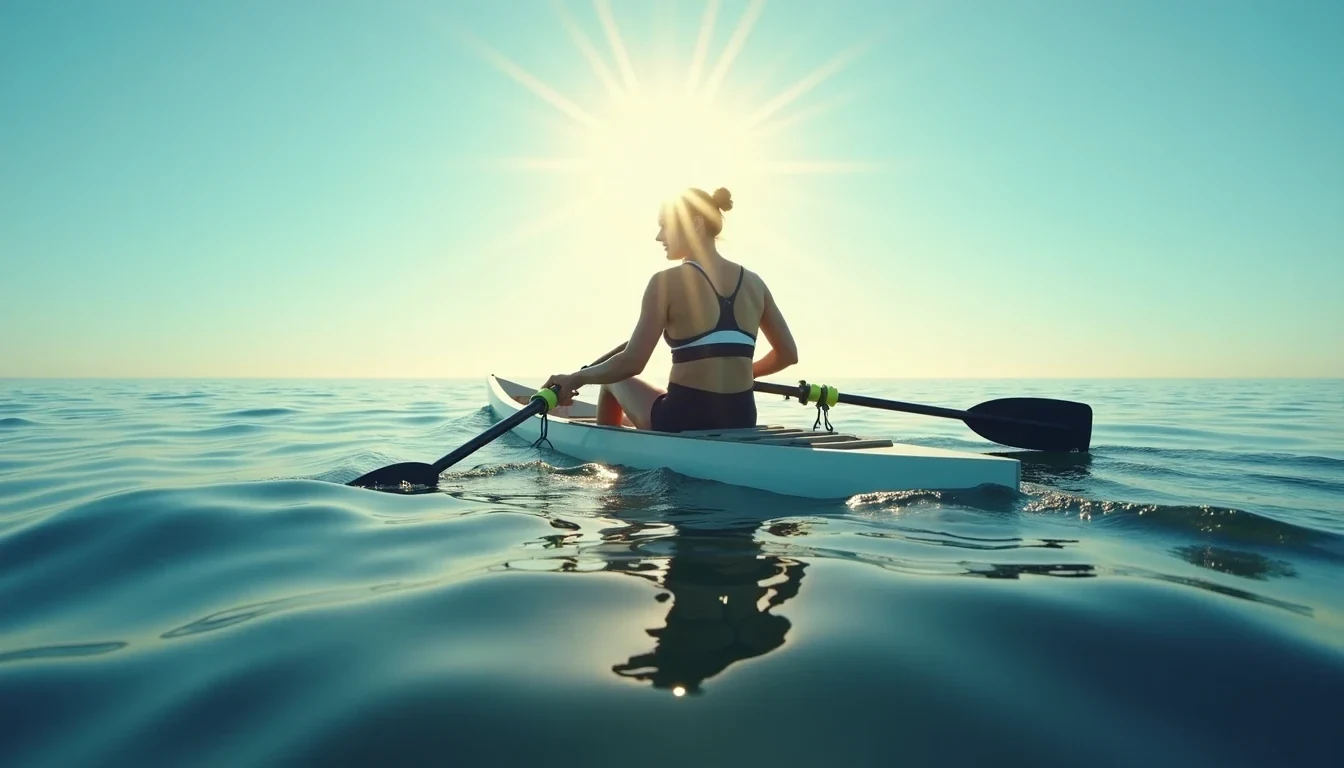
Kelsey Pfendler crossed the Pacific alone in a rowboat for 43 days, 17 hours, and 55 minutes, setting two records. She started out aiming to be the first American woman to row solo from California to Hawaii. By the time she touched land, she had also broken the overall mark for the route, beating the old best by more than a week.
That is the clean version. The ugly version is 2,400 miles of doing everything yourself while the ocean tries to make you panic, stall, or break something. There was no crew to hand her a fix, no teammate to take a shift, and no spare pair of hands when the weather turned, the boat acted up, or her body reminded her of its limits.
What actually happened
What actually happened
Pfendler’s trip from California to Hawaii covered roughly 2,400 miles, which she completed on her own in 43 days, 17 hours, and 55 minutes. This made her the first American woman to complete the solo route and the fastest solo rower of any gender on that crossing.
The previous overall record was 52 days, set by New Zealand’s Rob Hamill in 1999. Pfendler beat that by a comfortable margin, and the speed record was not her original goal. She went public with a very specific aim: to be the first American woman to finish the job solo. The record pace became an issue only as the finish got closer and her shore team realized she was well ahead of the old schedule.
Sports loves this kind of twist: a person sets out to clear one barrier, then accidentally smashes a bigger one.
Her background helps explain why the whole thing did not collapse at the first ugly patch. Before the row, Pfendler worked as a Grand Canyon rafting guide, a job built around judgment, repetition, and not falling apart when conditions change in real time. On the Pacific, that translated into the hard practicality ocean rowing rewards. She had to manage sleep, weather, navigation, food, water, and gear while still producing enough rowing to keep moving.
The boat became a tiny operating system. She checked the bilge pump, the water maker, the solar panels, and the rudder. She rowed in shifts, often aiming for 12 to 16 hours a day, usually in blocks of about 90 minutes or two hours, then rested. Fuel for that pace meant around 5,000 calories a day, mostly from dehydrated meals, shakes, bars, and whatever else could survive weeks at sea without turning into a science experiment.
Then there was the body itself. Saltwater sores, chafing, blisters, damp skin, and the general misery of never really being dry came with the territory. The Pacific did not care about the story arc. It kept demanding the same boring discipline, over and over, until the finish line finally showed up.
The Aftermath
The public story around the row was bigger than a personal record chase. Pfendler’s crossing raised more than $200,000 for Rowing Stronger, a charity that backs access to rowing for people usually shut out of the sport. She had gone in with a fundraising target of $100,000, so the final total more than doubled the ask and turned the expedition into a serious money move, not just a one-off endurance flex.
That fundraising piece fits the rest of the story because it gives the crossing a second job. It was not only about planting a flag in a male-dominated record book. It also put real cash behind a rowing charity that supports adaptive athletes, youth programs, and clubs needing equipment and help getting people on the water. Many sponsored endurance projects talk about impact; this one actually banked it.
The other thing that lands is how little of this had anything to do with the romantic image people usually hang on ocean rowing. From the outside, solo Pacific crossings look like freedom, salt spray, and a person staring into endless blue. In practice, it sounds more like a long shift with no off button. You row, you eat, you check systems, you row again. You watch the weather. You patch things when they fail. You keep yourself functional when sleep is chopped into tiny pieces and the nearest help is a radio signal away.
Pfendler’s result hits harder than the neat summary suggests. She ran the route as a one-person operation and did it fast enough to rewrite the record book. She was the first American woman and the fastest overall. She raised more than $200,000 for charity. And she endured 43 days of solitary maintenance, decision-making, and blunt-force endurance to make it all real.