Four decades in a drawer is a long delay for a fossil that turns out to be the first dinosaur bone ever found in Antarctica. Mike Thomson picked up a single vertebra on James Ross Island in December 1985, put it through the normal expedition pipeline, and it came back to Britain labeled for the wrong world. Everyone assumed it belonged to something marine because that was the kind of material the team was pulling out of those rocks. The bone stayed put while the story around it changed.
Now that vertebra has been identified as an 82-million-year-old tail bone from a titanosaur, the long-necked dinosaur family that includes the biggest land animals ever to walk the planet. The headline sounds like a field discovery, but the real story is cleaner and tighter. The find happened twice, once in the ice and once in a museum drawer.
How the bone was found
Thomson was working as a geologist with the British Antarctic Survey when he found the fossil on James Ross Island, off the northern tip of the Antarctic Peninsula. The date was December 1985, deep inside the short summer window when Antarctic teams can move around, collect material, and hope the weather does not turn the place into a shutdown machine.
The context explains the mistake. The surrounding formations were already producing marine fossils, so the vertebra was boxed with the rest of the haul and shipped back to Britain. Nobody had a reason to treat it like a major land-dinosaur clue. It looked like another piece from an environment that had been giving up sea creatures, not a giant herbivore from a vanished forest world.
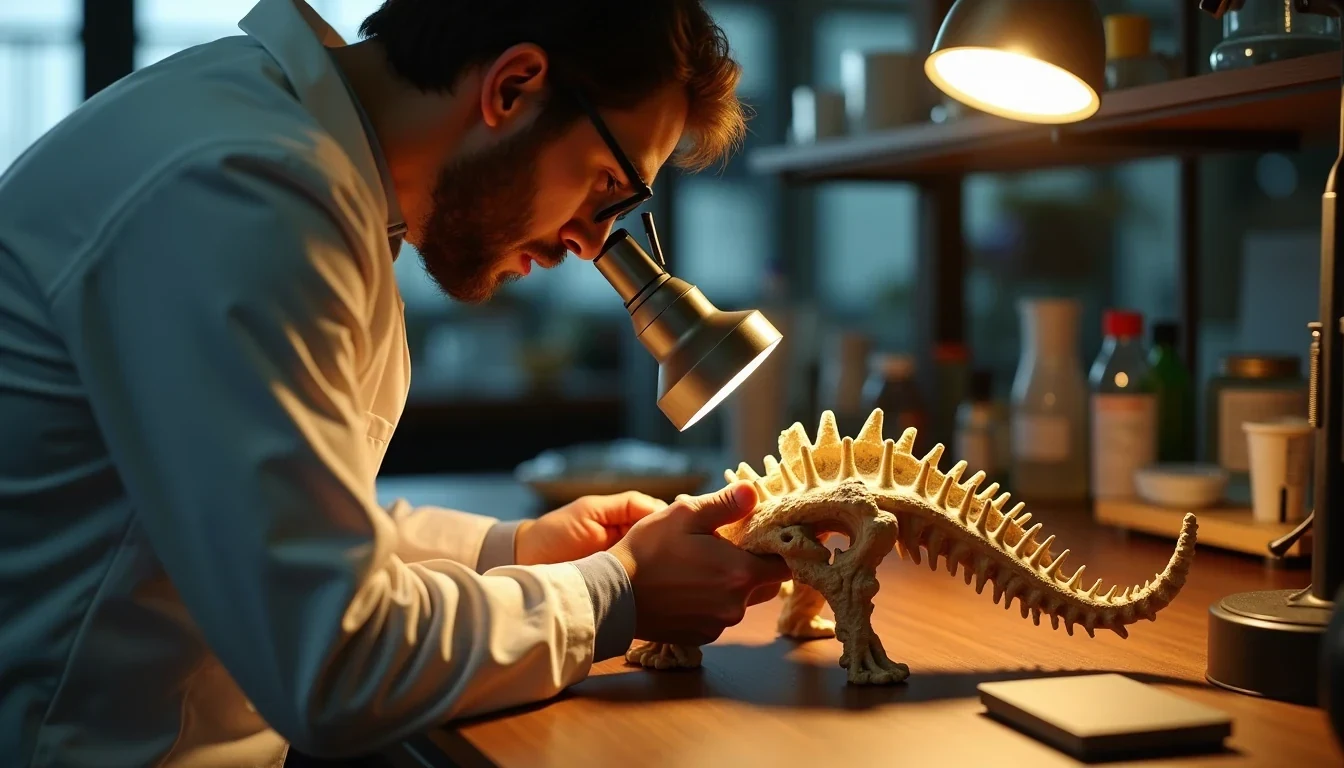
Then it sat. Not in some cinematic lost archive, but in the ordinary holding pattern that museums use every day: catalogued, stored, and waiting for someone with the right question. Four decades later, researchers took a fresh look and realized the bone was not marine at all. It belonged to a titanosaur, and it marked the first dinosaur bone ever recovered from Antarctica.
People like to flatten this into a triumphant fossil-hunter story. It is cleaner to imagine a windblown dig site, a dramatic brush-off of ice, and an instant scientific breakthrough. The actual version is slower, less glamorous, and closer to how this work usually happens. The winning move was not brute force in the field. It was comparison, patience, and a person looking again at something everyone else had already filed away.
The specimen is about 82 million years old, which pushes it into the Late Cretaceous, when Antarctica was nothing like the frozen continent on a map today. The titanosaur identification backs up the picture of a warmer, greener landmass with terrestrial animals moving through it. It also fits the larger Gondwana story, where southern continents were not sealed off in the way they are now.
What the drawer changed
Museum drawers get treated like dead ends by people who like their science in action-movie form. That attitude misses the point. A drawer is not a tomb for objects nobody cares about. It is a working part of the research process, and sometimes it is where the actual break lands.
Old specimens can be re-read. Labels can be wrong. Categories can collapse when a new comparison set arrives, or when a researcher with more specialized training finally gets eyes on the material. A bone that looked ordinary in 1985 can look obvious in 2026 if the right reference points exist. This is not a flaw in science; it is the system doing what it is supposed to do.
Antarctica makes the backlog worse. Field seasons are short, usually only a couple of months in the austral summer, and the logistics are punishing. Teams have to work fast, collect what they can, and get out before conditions turn hostile. Ice-strengthened ships, aircraft, safety limits, and weather delays all squeeze the clock. Material comes back faster than specialists can sort it.
That leaves institutions with shelves full of unclassified fossils and drawers full of specimens whose significance has not been tested yet. Some of those bones will be obvious once someone opens the box. Others will wait years. A few will sit so long that the person who collected them is no longer around to see the correction.
The Antarctica backlog
A bigger story exists here than one vertebra. Antarctic collecting is efficient in the field and messy everywhere else. Fossils are often shipped to different institutions, split across collections, and examined only when time and expertise line up. The continent’s short access window creates a bottleneck, and the bottleneck leaves gaps in the record.
Discoveries from Antarctica keep arriving in two phases. First comes the recovery, often during a summer field season with mud, wind, and a race against the weather. Then comes the slow part, when someone in a museum or lab revisits the material and asks a more precise question. In this case, the second phase took forty years.
The titanosaur vertebra also changes the scale of what people can say about Antarctic prehistory. It confirms that large land dinosaurs were there, not just marine reptiles and birds passing through old sediments. Antarctica was part of a living southern ecosystem, connected to other Gondwanan landmasses and capable of supporting big herbivores. That is a continent with a much deeper history than the white blank most people picture.
The claim story
The original collector, Mike Thomson, did his job in the field. The mistake happened in the handoff between expedition science and archive science, where so many important objects lose their drama. The team saw marine fossils around it, assumed the vertebra fit that pattern, and moved on. That is understandable, but it is also exactly how a landmark specimen can disappear into a drawer for decades.
The later identification did not rescue a forgotten curiosity. It corrected the record for an entire continent. Antarctica now has its first confirmed dinosaur bone, and the bone was not waiting in the ice for a hero. It was waiting in storage for a specialist to look again.
The aftermath
The cleanest lesson here is not about Antarctica. It is about how science actually works when nobody is filming it. The big reveal was not a dramatic new excavation. It was a correction, pulled out of existing material by careful classification and a fresh comparison.
Museum collections should look different. They are not back rooms. They are active research sites with unfinished business. Every drawer can contain something misnamed, overlooked, or simply ahead of its time. The romantic version of discovery is a man with a shovel. The real version is sometimes a researcher at a desk, turning over an old label and realizing the story is bigger than the box it came in.