Ötzi the Iceman took an arrow to the shoulder and died in the Alps 5,300 years ago. His body has not stopped changing since.
The 1991 discovery of this Copper Age wanderer was framed as a miraculous freeze-frame: a man preserved so perfectly that scientists could read his last meal, map his tattoos, and sequence his genome. That story sold well, but it was wrong. A comprehensive new microbial analysis reveals Ötzi carries three distinct biological layers that have been accumulating, shifting, and competing across five millennia. His gut still harbors organisms from his final days. His skin hosts cold-adapted microbes that colonized him during centuries in glacial ice. Overlaying everything is a living carpet of modern bacteria, fungi, and yeasts introduced through three decades of excavation, thawing, sampling, refrigeration cycles, and bare human hands.
What Actually Happened
The research team sampled across multiple body sites and found a complex microbiome that no single timeline could explain. Some organisms matched what researchers expect from ancient human gut flora. Others were psychrophiles, cold-loving species that could only have arrived during Ötzi’s long entombment in ice. The third and most problematic layer consisted of modern contaminants, the biological fingerprints of every scientist who handled him, every conservation treatment applied, every temperature fluctuation in his display and storage.
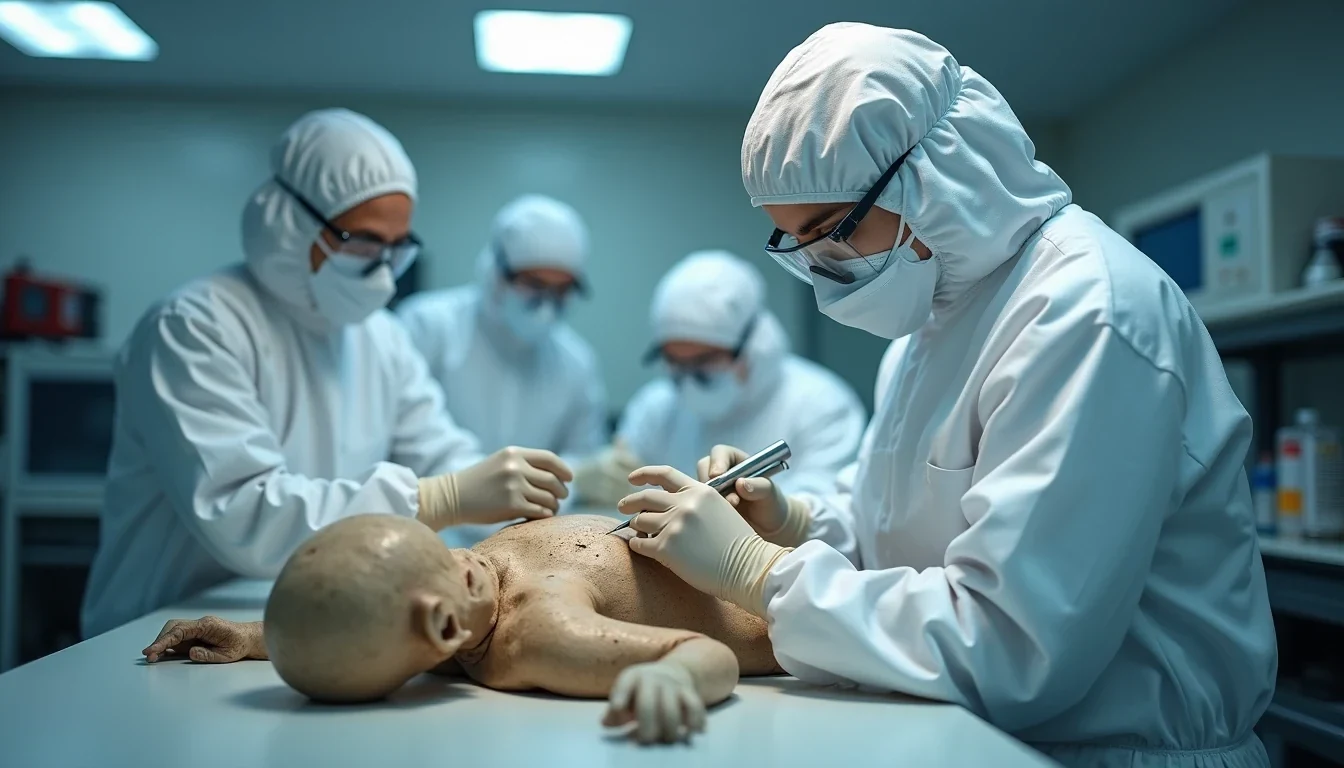
This creates a methodological nightmare and a scientific opportunity. Distinguishing these layers requires multiple independent lines of attack. Scientists examine DNA degradation patterns, ancient genetic material showing characteristic fragmentation and chemical modifications like cytosine-to-thymine transitions at strand ends. They run comparative metagenomics, matching profiles against databases of known modern environmental microbes from glacial ice, museum air, and human skin. They apply strict sterile protocols during sampling, working in cleanrooms with sterilized instruments and collecting parallel blank samples from the environment itself. Targeted gene sequencing of 16S rRNA for bacteria and ITS regions for fungi provides precise taxonomic identification, while depth of coverage analysis helps separate sparse ancient signals from abundant modern contamination.
The techniques are sophisticated, but the underlying problem is blunt: every time Ötzi moves, breathes museum air, or endures another research protocol, his biological record changes. Conservation and study actively rewrite the very data they seek to preserve.
The Aftermath
Previous claims about Ötzi’s health, diet, and environment now face uncomfortable scrutiny. Any study relying on microbial evidence from before these differentiation methods existed may have mistaken modern contaminants for ancient biology, or vice versa. The arrow wound killed him. The science done since has been killing the certainty of what we thought we knew.
This redefinition extends far beyond one Alpine mummy. The entire field of paleo-microbiology must now grapple with a specimen that refuses to behave like an artifact. Museums worldwide hold mummies, bog bodies, frozen remains, and skeletal material under the assumption that proper technique can freeze biological time. Ötzi proves otherwise. Every collection is a living record of its own stewardship, accumulating environmental and human biological signatures that will confuse or enlighten future researchers depending on how carefully current custodians document their interventions.
The ethical calculus of destructive sampling shifts accordingly. Removing tissue for analysis no longer merely depletes a finite resource. It introduces new contamination vectors while potentially destroying irreplaceable ancient microbial communities. The decision to sample becomes part of the specimen’s ongoing biological narrative, not a neutral extraction of information from a passive object.
For museum practice, the implications are operational and philosophical. Environmental control must evolve beyond static temperature and humidity targets to actively manage microbial ecology. Regular non-invasive monitoring becomes essential. Handling protocols approach cleanroom standards. Every intervention must be meticulously logged, not for bureaucratic completeness, but because the intervention itself constitutes scientific data.
The deepest challenge is conceptual. We want the past to be a fixed thing we observe from outside. Ötzi’s microbes refuse this comfort. His body is not a window but a palimpsest, written and overwritten by glacier, laboratory, and display case. The 5,300-year story now includes us as characters, our bacteria as plot developments, our conservation choices as turning points. The Iceman is dead. His biology has never been more alive.