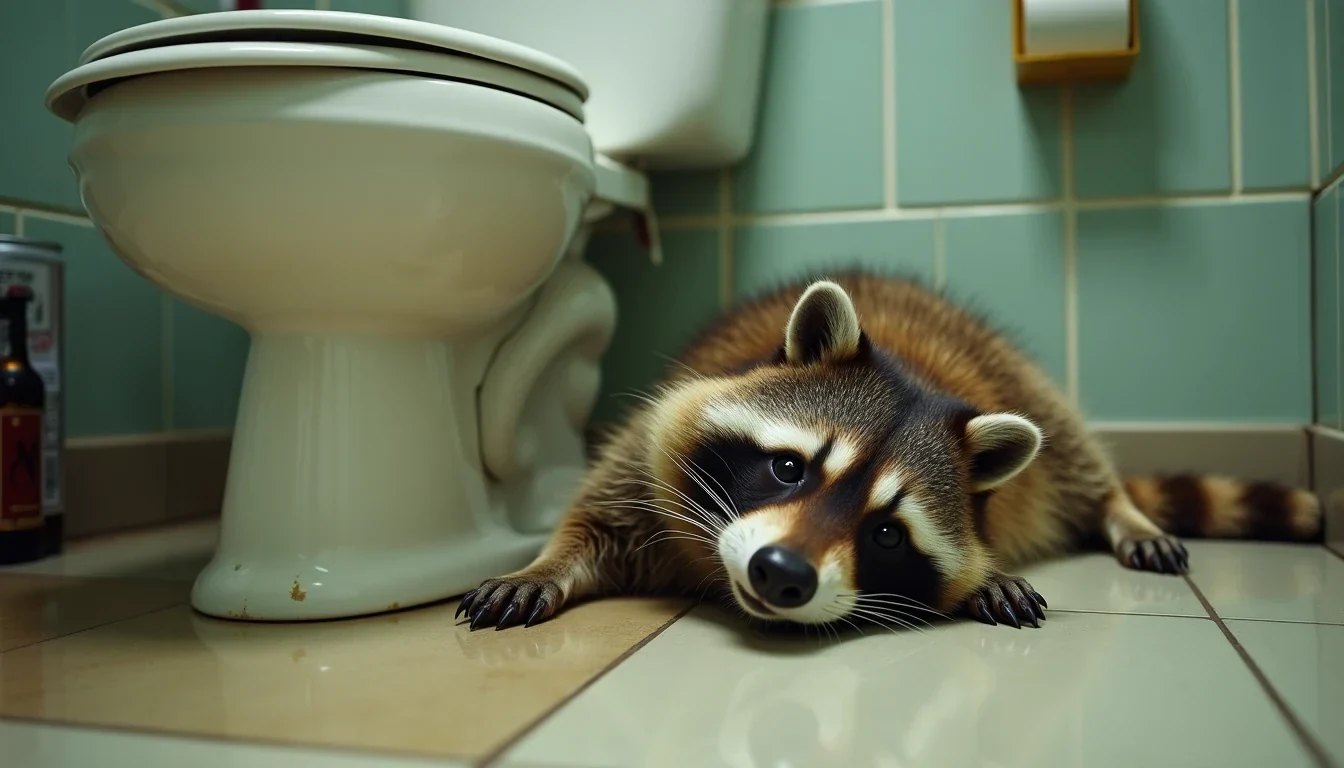
A Virginia state liquor store in Ashland opened one morning to a crime scene that needed no detective to name the culprit. The evidence lay everywhere: shattered glass, sticky floors, a trail of destruction leading to the bathroom, and the perpetrator himself still on the premises, spread-eagled beside the toilet, too drunk to flee. The mask should have been the giveaway. Raccoons wear them naturally, and this one had lived up to every cartoon stereotype of the midnight bandit before drinking himself into a stupor on stolen whisky and scotch.
What Actually Happened
The employee who discovered the scene performed a quiet reconstruction without needing training in forensics. Entry had come from above. The raccoon climbed exterior drainpipes or utility conduits to reach the roof, then exploited a weak point in the building’s ceiling structure, either pushing through a drop tile or finding a compromised access panel. From there he dropped into the store’s interstitial space and descended into the retail area, likely after hours when the building sat dark and silent.
The target selection showed either luck or alarming discernment. The whisky and scotch sat on a lower shelf, within reach of a standing raccoon. Bottles fell and broke. The animal lapped at the spillage, and the evidence suggests he did not stop at one. A trail of smashed containers and scattered liquid marked his path through the aisles, growing more erratic as the alcohol took hold. His final destination made perfect sense to anyone who has ever overindulged. The bathroom offered seclusion, cool tile, and proximity to a toilet. He collapsed there, legs splayed, and passed out cold.
Animal control staff removed the intoxicated animal and placed him in a quiet, warm enclosure to metabolize the alcohol. They monitored his neurological function, provided oral rehydration, and waited for him to demonstrate normal motor skills and alert behavior before releasing him back into the wild with no lasting injury. The raccoon served no sentence beyond the hangover.
The Aftermath
The clip circulated because the visual comedy writes itself: a masked face, a wrecked establishment, the bathroom finish. Social media users recognized the tableau instantly, overlaying human narratives onto an animal that had simply followed its nose into disaster. The raccoon became, briefly, a folk hero of poor decisions, a furry embodiment of every regrettable Saturday night.
Comments clustered around two poles: pure amusement and genuine concern for how the animal reached that state. Some viewers saw only the slapstick. Others noted the ceiling entry as evidence of adaptation under pressure, a wild creature navigating human architecture with the confidence of a species that has learned cities contain calories and shelter worth the risk.
The store itself faced inventory loss and cleanup, though the story generated enough attention that the brand damage likely netted out positive. A liquor store so appealing that wildlife breaks in to sample the stock is, in certain marketing logics, not the worst problem to have.
Why This Raccoon Knew Where to Look
The humor lands cleanly because the raccoon played a human role so precisely. The underlying dynamics deserve sharper attention than the joke permits. Raccoons do not enter commercial buildings for entertainment. They enter because the boundary between wild habitat and human development has thinned to the point of meaninglessness in much of suburban Virginia.
Urban sprawl around Ashland and similar communities fragments forest and wetland, displacing traditional food sources. Berry patches become parking lots. Streams run through culverts. The raccoon’s natural diet of insects, nuts, and small animals grows harder to locate, while human waste streams grow more accessible and more reliable. Unsecured garbage, pet food left on porches, and commercial refuse present concentrated calories that require far less energy to obtain than foraging in degraded habitat.
Buildings themselves become attractive as shelter. A ceiling void offers warmth, protection from predators, and safe denning sites during breeding season. The liquor store’s structural vulnerability was not unique. Raccoons nationwide exploit loose siding, uncapped chimneys, and roofline gaps with dexterity that frustrates property owners. They are not breaking in despite our defenses; they are finding entrances because our buildings leak and because we have built across landscapes they continue to use.
Presenting this incident as pure comedy risks obscuring that context. The “comic criminal” framing makes the raccoon an agent of chaos, a little outlaw choosing mischief, when the actual decision tree was simpler and more desperate: food access, shelter, survival. The alcohol was an accident of proximity, not a planned heist. If the lower shelf had held potato chips, the story would have been less viral and the raccoon would have been no less full.
The humor also builds a bridge. People who would scroll past a dry report on habitat fragmentation paused at this raccoon’s predicament. They shared it and talked about it. The anthropomorphic recognition, the flash of empathy for a creature with a hangover, creates an entry point for understanding why he was inside that building at all. The trick is not stopping at the laugh. The laugh is the door. What sits behind it is the harder material: a landscape where wildlife must adapt to human rules or perish, and where our structures, our waste, and our sprawl keep rewriting those rules without consultation.
The Ashland raccoon recovered fully and returned to whatever territory remains available to him. The store patched its ceiling. The internet moved on to the next distraction. But the structural conditions persist, and the next masked bandit is already testing the roofline somewhere, following his nose toward whatever we have left within reach.